
As an organization grows, so does the volume of data it produces, gathers, and processes. Data generated from customers’ transactions, website activities, sales performance, operational processes, and analytical tools continually creates new data that organizations can use to inform their decision-making. However, if the data infrastructure used by a company when it first began operations does not evolve with the growing demand for data, then the company will experience problems.
Once a successful report delivery mechanism and operational support system, the architecture has now become a cause for delay in report generation, increased cost associated with the operation of the infrastructure, and inconsistencies in the accuracy of insights. As data pipelines have slowed down, dashboard response times have slowed down, and storage expenses have increased, so too have the problems faced by employees who are trying to share consistent information between their respective departments.
The problem of inadequate computing power is often not the cause of these issues. Many times, the data architecture supporting the organization has been developed without consideration for the size, complexity, and/or workload requirements of the organization as it currently exists.
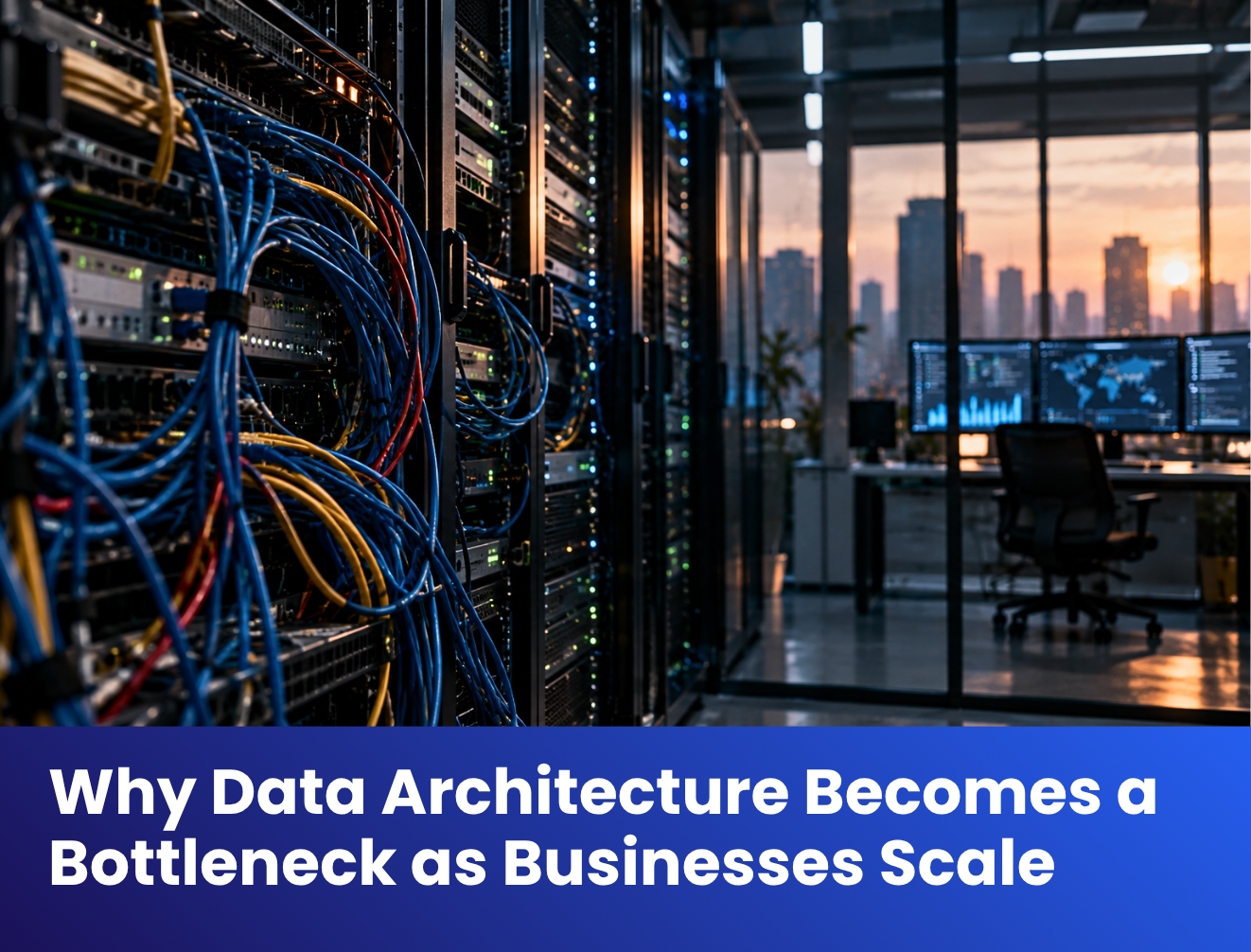
The bottleneck in data architecture is created when the systems that store, process, integrate, and deliver the data cannot keep up with the demand from the business. A temporary solution to this problem can be found by adding more servers or optimizing specific queries; however, long-term solutions will likely involve making changes to how the overall data environment is structured.
This paper will examine the indicators that indicate your current architecture cannot grow with your business needs, common issues with respect to both storage and computational capacity, how distributed systems and state-of-the-art data architectures can assist you in addressing these issues, and when a business may want to redesign its current data architecture.
1. What Is Data Architecture, and Why Does It Matter?
The way in which an organization gathers, retains, processes, integrates, administers, and utilizes its data is referred to as data architecture.
In addition to being comprised of various types of data storage systems (e.g., databases, data warehouses, and data lakes), the data architecture also includes all of the components that allow for movement of data from one location to another (e.g., data pipelines), the integration of multiple data sources, the execution of computations on the stored data (e.g., processing engines), the security measures implemented to protect the data, and the connections between each of these different components.
A business’s ability to effectively transfer data from where it originates to those who require it, as well as use data in the development of business processes and products, is supported by a properly developed data architecture. In addition to enabling the effective transfer of data, a properly developed data architecture assists businesses with maintaining data quality, ensuring data security, governing data usage, and producing accurate analytical results.
For instance, an online retail company can gather data from its website, credit card processor, inventory control system, and customer relationship software. The company’s data infrastructure will determine the manner in which data from the various sources can be integrated into a report regarding sales, customer patterns, inventory status, and profitability.
For a small business, a single database and some scheduled data pipelines could suffice. However, once that small business begins to grow by expanding into new geographic regions, adding new products, and processing thousands more daily transactions than previously, the existing database/pipeline design may no longer be adequate for meeting the needs of the growing business.
The problem is not just how to process more data. There are other challenges that businesses have to deal with, such as managing more users, more data sources, more complicated data transformations, and higher demands for data accessibility.
Growth can highlight flaws across all areas of a data system if it doesn’t have an architecture that will allow for modifications.
2. Warning Signs That Your Data Architecture Cannot Scale
Data Architecture Issues Do Not Generally Develop Overnight. Rather, They Typically Develop Gradually As Workload Increases And Existing Systems Approach Their Limits.
Business owners should recognize early indicators of potential architectural problems to allow for corrective action to be taken prior to the impact on business processes.
Slow Reports and Analytics
One of the most visible warning signs is declining query performance.
Reports that used to open quickly may now take several minutes to display. Business Intelligence Dashboards may take a long time to update, and analysts may have to wait longer to see their findings.
Delays may happen when tables increase in size substantially, queries access irrelevant data, indices or data layout is poor, or different applications compete for access to the same resources.
A retail company will typically begin generating daily sales reports from its database that has thousands of transactions. Over time, the size of the database increases to millions of records. This large database is then used for multiple purposes such as reporting, operational applications, and customer analytics.
The initial way of reporting could have difficulty handling all of the different types of work that need to be done.
Increasing Data Processing Delays
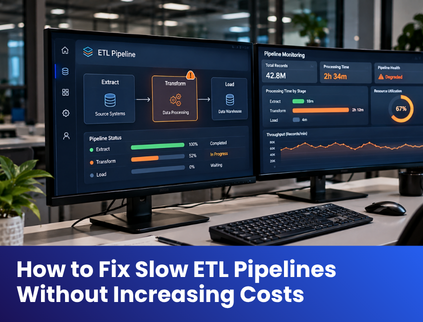
Another sign that indicates your system may be experiencing performance issues is if the time it takes for data pipelines to finish increases.
A pipeline that used to finish prior to the start of the working day will eventually be running during the working day. As a result, teams may be forced to make decisions based upon out-of-date information.
Delay in processing can be caused by inefficient transformations, too much data being transferred, poor use of parallelism, or competing with other processes.
In addition to optimizing processes regularly, when the time it takes to process through a pipeline continues to increase, it is possible that there needs to be a review of the architecture supporting the pipeline.
Rising Infrastructure Costs
As the amount of data grows, there is a natural increase in some of the expenses associated with maintaining the infrastructure. On the other hand, if expenses grow at a quicker rate than the value being created by the business, then this may indicate that there are problems with how the system was designed.
The organization is likely duplicating data sets, processing old historical records repeatedly, using too much computing power, and/or transferring data among numerous systems without any need.
The cost of simply adding more storage capacity or computer hardware may increase your costs and not resolve the issue.
Inconsistent Data Across Departments
As companies expand, many departments create their own databases, reporting tools, and data integration processes.
The sales department will report a different amount for revenue than what the finance department reports. In addition, the marketing department will have its own unique set of data regarding customers, but operations will use a modified form of this same data.
These contradictions usually mean that there is no clearly defined ownership of data, consistent terminology, and/or dependable means of integrating systems.
A scalable architecture will provide support for the growth of workload and provide continuous access to reliable data.
3. Common Data Storage Bottlenecks
Storage constraints limit how effectively businesses can use their data, regardless of the processing power they have at hand.
Limited Storage Capacity and Expensive Scaling
As data grows in volume, traditional storage systems can be difficult and/or costly to expand.
Some systems will require larger machines to handle the increased load.
Other systems may need to be redesigned so that data can be distributed among many different servers.
Organizations that do not plan for their storage requirements can find themselves experiencing issues with capacity, maintenance, and/or unforeseen expenses.
Poor Data Organization
Storing more data does not automatically make it easier to analyze.
Large data sets can contain unnecessary columns; repeat records; have inefficient file structures; and/or organize data differently than what is commonly used for querying.
As an example of wasting processing power, if a data analysis system is programmed to read the entire data set each time it needs to respond to a question regarding a specific month, then that system is wasting valuable processing power.
Using proper partitioning of data, selection of the best format for a particular type of data, eliminating unneeded data, and optimizing how you organize your data will allow you to minimize accessing data that you do not need. However, applying each technique should be done based on the specific use cases of your application. Applying too many partitions or using an inefficient organization of data may create other problems.
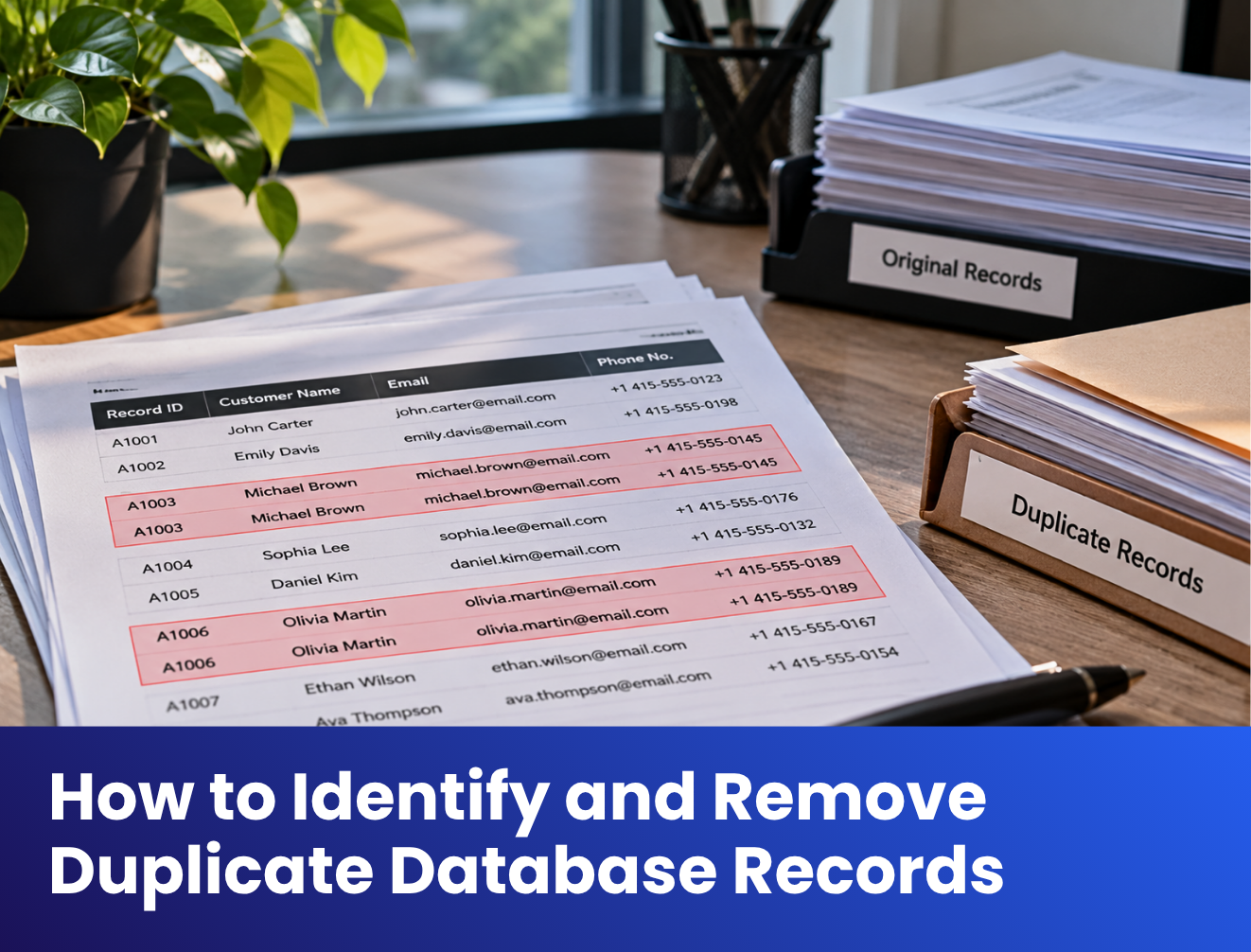
Data Duplication
In order to facilitate reporting, app dev, and business-unit-specific analytics, many organizations duplicate their data into multiple systems.
A certain amount of duplication may be needed; however, too much duplication results in increased storage expenses and creates further synchronization problems.
If you update a customer record on one system and the other system has an old version of that customer record, then downstream reporting could become unreliable.
Businesses must determine which duplicate copies have a defined objective, and then eliminate any duplicates that are not needed using improved data integration and management practices.
4. Processing Bottlenecks: When Data Workloads Outgrow the System
Raw data is transformed into a format that can be used to perform analysis, create reports, and support business operations.
As workloads grow, the processing layer can become a major limitation.
Inefficient Data Pipelines
A poorly designed pipeline will allow you to process the same records over and over again. It will also cause you to complete extra steps in your data transformation process. Lastly, it will prevent you from being able to use the power of parallel processing because of how it is ordered.
A pipeline that re-reads all of last year’s transactions every day will become more and more expensive as transaction history grows.
When using an incremental approach to processing data, you will be able to limit the amount of processing required to only include those records that are either new or have been updated since your last process.
Other potential improvements include the elimination of unnecessary transformations, optimization of joins, and isolation of autonomous tasks so as to allow for concurrent execution.
Limited Processing Capacity
A few of the architectures use a single machine or a few closely linked machines.
As the size of data sets and the number of analysis tasks increase, there will come a point where these capabilities are not sufficient to finish jobs in a reasonable amount of time.
When you increase the size of your memory or CPU, there is a point where this becomes cost-prohibitive or technically impossible.
Distributed processing is an alternative to distributed computing because it uses multiple computers to divide large amounts of work.
Resource Contention
A single data platform can simultaneously handle multiple tasks such as ingestion, transformation, reporting, and machine learning.
When there are many processes competing for resources, one process can delay the execution of another process.
A very long data analysis query, for example, can use up all the resources required by a fast-reporting data pipeline.
These conflicts can be reduced through the use of workload isolation, resource allocation, scheduling, and computer environment options tailored to specific workloads.
The goal is to provide resources for critical business processes while avoiding the over-provisioning of the entire platform.
5. Data Access and Integration Challenges
Even though storage and processing systems both work well independently, businesses may experience bottlenecks as they attempt to access and combine information.
Growing Number of Data Sources
With the growth of business operations, companies usually implement more than one type of application for their sales, finance, customer service, advertising, and supply chain functions.
Data formats, identification methods, API’s, and update frequency will vary by application.
Integrating each additional application will increase the complexity of your system by requiring you to create a unique connection for every single one.
When you have only a few systems to connect, then point-to-point connections may be adequate. However, as the number of systems to connect increases, the maintenance effort required to support those connections also grows.
The more formal structure for your integration architecture will help you decrease the amount of complexity in the way you move data, create reusable interfaces, and establish who owns what with respect to your most important data.
Slow Data Availability
Businesses are now demanding real-time data instead of reporting on the previous day’s information.
In contrast, the conventional batch processing of data results in a schedule for updating the analytic data.
This isn’t always an issue for each business operation. While monthly financial reporting doesn’t necessarily need to be updated, fraud detection or inventory availability will likely require information in near-real-time (seconds to minutes).
When the way in which data is delivered by an architecture can no longer meet the needs of a business, there will be a bottleneck.
Organizations need to determine the frequency at which they will update their data (i.e., how often they will process data), as well as the method of data processing that is most appropriate based upon whether they use batch, streaming, or hybrid data processing.
Difficult Data Discovery
Employees can have trouble locating the right dataset, understanding what it represents, and determining whether they can safely utilize it.
When data is distributed among many different systems that do not share documentation or ownership, this issue occurs more often.
Data catalogs, metadata management, access controls, and common definitions allow users to find reliable data and avoid having to constantly ask their engineering team for help.
6. How Distributed Computing Helps Businesses Scale
The distribution of a given task/workload among many different types of computer systems is an alternative to performing all of the work on just a single system.
A distributed processing engine will be able to split the processing of a large data set into smaller jobs, process each job using several worker nodes, then merge the output from each worker node together.
This approach can improve performance and scalability for suitable workloads.
For example, if an organization is processing billions of transactions per day, they can split the processing of those transactions among multiple computers. This means that each machine is responsible for processing a portion of the transaction data, which reduces the reliance on the processing capabilities of a single computer.
The primary benefits of distributed computing include: large-scale data transformations, complex analysis, machine learning, and high-volume data processing.
However, it does not eliminate every bottleneck.
The introduction of distributed systems also includes other factors such as network communication, shuffling of data, coordinating the overhead involved in a system, failure of tasks, and the unequal distribution of work within the system.
Poor performance of a distributed job is possible even when the job has been optimized well. If the job transfers an excessive amount of data from one worker to another, then performance will likely suffer. Also, if there are many workers involved in a task and only a few workers are given all the work, performance can be affected.
Businesses should determine if there is an advantage to using distributed processing with their workload and use the most efficient way of executing it instead of automatically assuming that the use of more machines would result in increased performance.
7. How Modern Data Platforms Address Architectural Limitations
Modern-day data platforms provide functionality to enable organizations to handle the increased amount of data they produce, the varying types of work being performed on those systems, and evolving analysis needs.
The right platform for a business depends upon its current systems architecture, its operational patterns, what type of security measures are required by the organization, and where it intends to be in the future.
Cloud Data Warehouses
Cloud data warehouses are a type of cloud-based service that allows organizations to run their own analytical queries, generate reports, and conduct business intelligence activities within a managed environment.
Many companies provide dynamic computing power, remote management of the hardware, and tools for controlling the amount of work being done.
By reducing the burden of operating physical infrastructure, organizations will be able to alter their resource allocation based upon fluctuating analysis needs.
However, even though businesses are now able to utilize cloud-based database services, they will always need to control the speed of their queries, the way that their data is organized, who can access their data, and how much it costs to run those services.
Data Lakes and Lakehouse Architecture
A data lake is used to store large amounts of structured, semi-structured, and unstructured data. It provides a good base for doing things like analytics, data science, and machine learning.
Lakehouse architectures are able to combine both the flexible storage approaches of data lakes and some of the features that would typically be found in data warehouses (i.e., reliable table management, schema enforcement, and the ability to process analytical workloads).
Databricks and other platforms provide a lakehouse-based model for data engineering, analysis, and artificial intelligence (AI).
Businesses can use these types of architectures to minimize the amount of unneeded data moving around their systems, as well as have access to many different ways of working with data through a more consistent way of managing data.
A lakehouse, however, is not always the most effective option for all organizations. The quality of implementation, governance, workload needs, and operating experience will continue to be significant.
Managed Cloud Infrastructure
Businesses can use cloud infrastructure to scale their computing and storage needs based on the amount of work they need to do.
Organizations have access to services from providers like Amazon Web Services and Microsoft Azure for building scalable data environments.
Managed Services may cut down on the work that goes into maintaining your infrastructure. Automated tools can assist in provisioning, scheduling, and responding to changing demands for resource usage.
Moving a poor design to the cloud will not fix its problems. Cloud migration includes evaluating workload patterns, integration requirements, performance needs, and anticipated costs.
8. When Should Businesses Redesign Their Existing Data Architecture?
It is possible that a performance issue does not require you to rewrite the entire system. In many cases, you can optimize your queries, add indexes, create better pipelines for your data, or increase the amount of computing power you have available to address the issue.
A broader architectural redesign can also be justified when recurring issues affect several systems, or if those same issues prevent the organization from meeting key business needs.
Consider redesigning the architecture when:
- Although performance is still an issue despite having optimized specific areas, if the reports and pipelines remain slow after reasonable amounts of optimization have been done, the existing storage/processing design may not be able to handle your present workload.
- The cost of infrastructure increases significantly over time. Adding additional resources continuously with little to no performance improvement is likely due to an issue such as inefficiently moving data, duplicating data, or managing workloads poorly.
- Integrating new data sources can be difficult. If every time a new application is developed, it needs to have a lot of custom programming done for it, then you should consider standardizing your integration architecture.
- Business requirements are changing. An organization that is transitioning from a daily report model to a real-time analysis model will require a change in how they collect data, process it, and store it.
- The system doesn’t have the capacity to handle new ways of being used. New developments in machine learning, advanced data analysis, and reporting from different departments will likely need features which the current architecture cannot effectively support.
- The maintenance of systems is becoming more and more difficult. If the majority of team members are spending their days fixing problems with pipelines and dealing with integration issues, rather than making changes that will improve performance, then the system architecture could be hindering productivity.
The design process of your new system must be based on facts (not opinions). Before you select an appropriate design, you should evaluate the following: Workload metrics, Data flow diagrams, Recurrent problems/failures, Cost trends, and future business needs.
9. A Practical Approach to Improving Data Architecture
Through a structured process of improvements, businesses are able to decrease the number of bottlenecks that exist within their architecture.
Step 1: Assess the Current Environment
Document the data source(s), storage system(s), pipeline(s), integration(s), consumer(s), and infrastructure dependency(ies).
Identify which components handle the largest workloads and where delays occur.
Step 2: Establish Performance Baselines
Determine query latency, pipeline execution time, age of data being used by the system, amount of resources consumed, frequency of failures, and cost to operate the system.
These metrics allow you to determine if there are localized performance problems as opposed to system-wide architectural constraints.
Step 3: Identify the Main Bottleneck
Is there a primary restriction that includes one of the following: storage, computing, network communication, quality of data, integration, or competition for resources?
Avoid redesigning the entire system before understanding the actual cause.
Step 4: Prioritize High-Impact Improvements
Make your first change address significant business issues, and provide a way to measure its impact.
An example of such improvements includes incremental data processing, optimized layout for storage, separation of workloads, increased efficiency of orchestration, and/or a more flexible pattern for integrating systems.
Step 5: Plan for Future Growth
Predict expected increases in data volume, concurrent users, frequency of processing, and complexity of analysis.
The design of the architecture must be able to handle realistic growth, while keeping it simple enough to avoid adding unnecessary complexity.
Step 6: Measure the Results
Compare performance and costs against the original baseline.
Monitor the environment for continued success in scaling up, as it requires continuous monitoring, not an immediate upgrade to the existing infrastructure.
Conclusion
As companies grow, so too will their use of data. This means that data architecture will increasingly be seen as a constraint to growth. At a company’s early stage of development, the data architecture was likely developed with limited consideration of how it would perform when the company reached a larger size. Thus, when a company begins to experience the growing pains associated with scaling up, they will likely find themselves having to reevaluate and potentially redesign their data architecture to support the increased load on systems, processed data, integrated applications, and the need for real-time access to information.
When you see slow reports, delayed pipelines, increased infrastructure costs, inconsistent data sets, and increasing maintenance requirements, these are clear indications that your current architecture might require some review.
Organizations have several options for dealing with the challenges described above: distributed computing; cloud infrastructure; data warehousing; and a lakehouse platform. But simply using these technologies will not provide a complete solution. In addition to adopting the proper technology, companies must also develop effective strategies for managing their data, developing and implementing pipelines, managing workloads, integrating systems and applications, and governing their environments.
A company’s decision to modify its current data architecture should be determined by the presence of identifiable limitations in the system and by how the organization plans to utilize its data to support future growth.
If a single problem is found within the data architecture, it may be possible to resolve the issue through targeted optimization of the affected area; however, if several issues are identified throughout the entire architecture, then a more extensive transformation of the architecture may be required.
The ultimate goal of a scalable data architecture is to provide the ability for organizations to work with larger amounts of data. In addition to providing this capability, a scalable data architecture will allow organizations to have confidence in the accuracy of the data they use, help them manage the cost of their IT infrastructure, enable them to implement new forms of analysis, and give them the freedom to make business-related decisions based upon the data provided to them by the system that delivers the data.
Frequently Asked Questions
1. What causes data architecture bottlenecks?
Common causes of bottlenecks are slow data processing pipelines, limited computing resources, too much data duplication, too many complex integrations, and bad workload management; these types of bottlenecks will likely be more obvious as the amount of data increases and as business needs grow.
2. How can businesses make their data architecture more scalable?
Business organizations can increase their ability to scale by making data pipelines more efficient, adopting incremental processing of data, improving how data is stored on systems, distributing workload appropriately, and using platforms that allow for scaling with increasing amounts of data. In addition to these methods, they must create data governance policies and track both performance and expenses.
3. What is the role of distributed computing in data architecture?
Distributed computing distributes suitable workloads among several different computing systems. While distributed computing allows for increased processing capability and improved performance when processing large amounts of data, the systems that are used for distributed computing need to be managed appropriately to ensure that the distributed computing system functions correctly (i.e., managing the communication among the systems, moving the data between the systems, and distributing the workloads among the systems).
4. What is the difference between a data lake and a lakehouse?
A lake is an option for storing various forms of data. It also allows for flexible storage of those forms of data. In addition to being able to provide a flexible way to store the various forms of data, a lakehouse offers some additional features, including but not limited to providing reliable table management and analytical processing options. These options will enable organizations to have the ability to utilize many different data workload scenarios within a single, unified architectural framework.
5. When should a business redesign its data architecture?
Performance problems are continuing after optimization efforts have been made, the cost of maintaining current infrastructure is too high, integration is becoming increasingly difficult, or your existing system does not allow you to implement new business requirements. Before implementing a new architecture, businesses need to assess their existing environment.